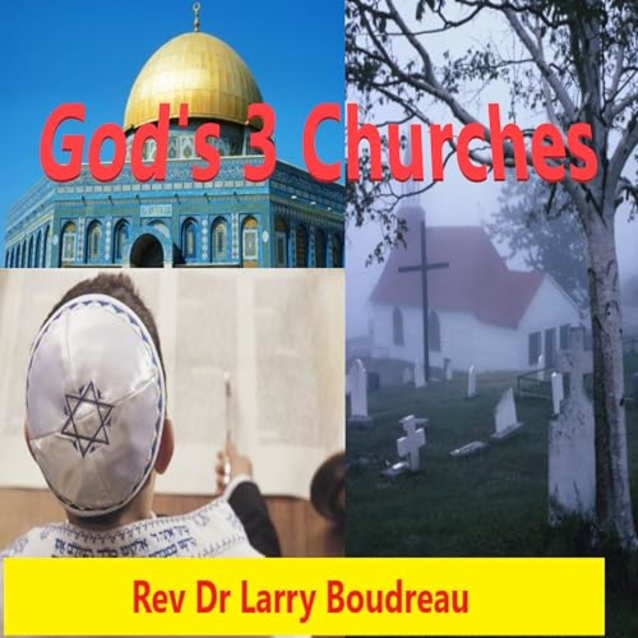
God’s 3 Churches
About
The book aims to illuminate the shared origins and distinct journeys of the three major Abrahamic faiths—Judaism, Christianity, and Islam—by exploring their theological foundations, historical developments, and the dynamics of interfaith relationships. It seeks to foster understanding, encourage dialogue, and inspire appreciation for the diversity and unity within the Abrahamic tradition.gods-3-churches.docx
Structure and Key Themes
1. Abraham’s Legacy: The Genesis of Faith
- Abraham is presented as the foundational patriarch for Judaism, Christianity, and Islam. His journey from polytheism to monotheism, his covenant with God, and the stories of his sons, Isaac and Ishmael, are explored as the roots of the three faiths.
- The book details how each tradition interprets Abraham’s legacy differently: Judaism through Isaac, Islam through Ishmael, and Christianity through Jesus as a descendant of Isaac and David.gods-3-churches.docx
- Focuses on the covenantal relationship established at Sinai, the giving of the Torah, and the centrality of law (Halakha) and commandments (mitzvot) in Jewish life.
- Emphasizes the importance of communal identity, ritual observance (such as Shabbat and Kashrut), and the ongoing process of interpretation and adaptation through rabbinic tradition.gods-3-churches.docx
- Centers on the person and work of Jesus Christ, his divinity, atoning sacrifice, and resurrection as the ultimate fulfillment of Old Testament prophecy and the inauguration of a new covenant.
- Highlights the role of faith, grace, and the transformative power of the Holy Spirit, shifting the focus from external law to internal spiritual renewal and relational worship.
- Traces Islam’s roots to Abraham’s rejection of idolatry and his submission to the one God, emphasizing the concept of Islam as submission.
- Discusses the Quran as the final revelation, the Five Pillars as embodied acts of worship, and the importance of obedience, community (Ummah), and law (Sharia)
- Uses the biblical story of Cain and Abel as a metaphor for religious division, jealousy, and the “murder of brotherhood.”
- Explores how exclusivist claims, historical grievances, and theological pride have led to conflict both within and between the Abrahamic faiths.
- Contrasts the embodied, action-oriented devotion of Islam (flesh), the law-centered practice of Judaism (word), and the Spirit-led, relational worship of Christianity (spirit).
- Examines how these emphases shape religious practice, community life, and the believer’s relationship with God.